

- 18% of new dementia cases in the U.S. may be linked to cumulative lead exposure, equivalent to approximately 90,000 new cases each year
- Bone lead levels were strongly associated with dementia risk and reflect cumulative lifetime exposure, while current blood lead levels were not associated
- Individuals with the highest estimated bone lead levels had:
- 3 times the risk of developing Alzheimer’s disease compared with those with the lowest levels
- 2 times the risk of developing any type of dementia compared with those with the lowest levels
Key Takeaways
- Lead exposure may contribute to dementia risk: Approximately 18% of new dementia cases in the U.S. may be linked to cumulative lead exposure, representing roughly 90,000 new cases each year.
- Higher exposure was associated with greater risk: Older adults with the highest estimated bone lead levels had nearly three times the risk of Alzheimer’s disease and more than twice the risk of any dementia compared with those with the lowest levels.
- Reducing lead exposure may help protect cognitive health: The findings highlight opportunities to strengthen environmental protections and lead hazard remediation, improve monitoring and surveillance, and educate communities about reducing household lead exposure.
An estimated 7.2 million Americans age 65 and older live with Alzheimer’s disease, the most common type of dementia.1 As the U.S. population ages, Alzheimer’s disease is expected to affect 13.8 million Americans by 2060, making it a growing challenge for individuals, families, health care systems, and the economy.1 Because there is currently no cure, identifying and addressing potential risk factors that may help prevent or delay onset has become an urgent public health priority.
Emerging evidence suggests that lead exposure over the lifetime may be an important and overlooked modifiable risk factor for Alzheimer’s disease and dementia. The U.S. has made substantial progress in reducing lead exposure and lowering blood lead levels over the past 50 years, including through policies that phased out leaded gasoline, established national requirements for contaminants in drinking water, restricted lead-based paint, reduced lead in consumer products, and curbed emissions from lead-releasing facilities. As a result, children’s blood lead levels have declined by more than 90% since the mid-1970s.2
Although blood lead levels have declined dramatically in recent decades in the U.S., many older adults were exposed to much higher lead levels earlier in life. It is estimated that as many as 170 million adults alive today experienced elevated lead levels during childhood.3
Exposure may also continue throughout adulthood through proximity to a lead-releasing facility, contaminated soil, occupational settings, lead-based paint in older homes, aging drinking water infrastructure, and other sources. No level of lead exposure is considered safe. Even low levels can contribute to adverse neurological, cardiovascular, developmental, and reproductive health outcomes throughout the life course. Additionally, lead accumulates in bones, where it can remain stored for decades. As people age and their bones weaken and become less dense, lead stored in bone is released back into the bloodstream. It can then circulate to organs such as the brain, potentially contributing to adverse health effects later in life.
Despite growing interest in dementia prevention, the role of environmental exposures such as lead remains poorly understood.
The research
This policy brief summarizes findings from two complementary studies examining the relationship between lead exposure and cognitive health among adults age 65 or older.

The first study examined whether cumulative lead exposure was associated with the risk of Alzheimer’s disease and all forms of dementia among older adults. Researchers estimated bone lead levels as a marker of cumulative lead exposure because it more accurately measures long-term lead accumulation than blood lead levels, which primarily reflect exposure in the past month. They analyzed nationally representative data from the National Health and Nutrition Examination Survey (NHANES) linked with Medicare claims and mortality records for up to 30 years of follow-up.

The second study examined whether living near a facility that releases lead into the air, water, or land was associated with cognitive performance among older adults. Researchers assessed residential proximity to lead-releasing facilities using the U.S. Environmental Protection Agency’s Toxics Release Inventory Toxics Tracker, and used standardized scales to measure episodic memory, semantic memory, and executive function at baseline and two years later. They analyzed data from two cohorts of Kaiser Permanente Northern California members.
Takeaways from the research
1
Older adults with higher lifetime lead exposure were more likely to develop Alzheimer’s disease and dementia

2
Older adults living near a lead-releasing facility were more likely to have memory and thinking problems
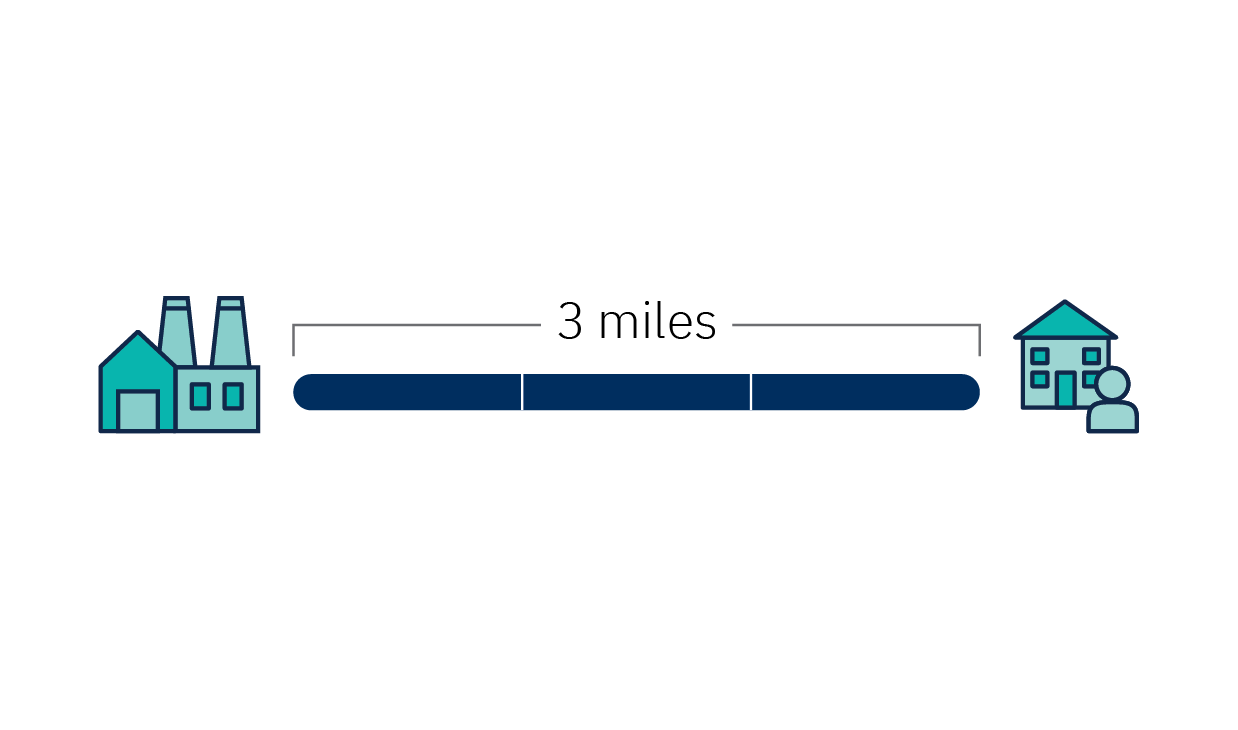
Older adults who lived about three miles from a lead-releasing facility – such as glass, concrete, electronics or computer manufacturers – performed worse on standardized cognitive tests than those who lived farther away.
Compared with participants who lived farther away, those living within three miles of a lead-releasing facility had cognitive performance similar to that of someone who was approximately:
- Up to three years older on tests of episodic memory (long-term memory for personal experiences)
- Up to seven years older on tests of semantic memory (knowledge of facts, concepts, and meanings)
Each additional three miles of distance from a lead-releasing facility was associated with better memory performance two years later.
What are the implications for policy and practice?
Together, these studies suggest that reducing lead exposure across the lifespan may help support cognitive health, promote healthy aging, and reduce the risk of developing dementia. Early intervention to reduce lead exposure throughout childhood and adulthood is an important opportunity to protect current and future generations from accumulating harmful lead exposure.
Policymakers have substantially reduced lead exposure by regulating lead levels in paint, drinking water, outdoor air, occupational settings, and waste. In 2024, industrial releases of lead compounds in the U.S. still exceeded 500 million pounds. Since there is no safe level of lead, existing lead policies could be more stringent. In addition, we do not have enforcement standards for all potential sources of lead. For example, the U.S. Food and Drug Administration has action levels of lead for food intended for small children, but not for food intended for adults. Lead action levels could be implemented for additional sectors. Because lead persists in communities, government agencies can continue to identify communities at greatest risk of exposure through surveillance and mapping and target prevention, remediation, and public health awareness efforts where exposures remain highest.
Health departments and community organizations can play an important role in helping residents understand local sources of lead exposure from nearby lead-releasing facilities. Organizations can increase awareness and use of mapping tools from the U.S. Environmental Protection Agency, such as the Toxics Release Inventory Toxics Tracker4, to help them better understand local environmental hazards. In areas where exposures may be more likely, providing community education and strategies to reduce household exposure can be helpful. For example, people can minimize lead-contaminated dust from accumulating in their house through regular cleaning, removing shoes before entering, and using entryway mats.
Although household practices may help, lasting reductions in exposure will likely require sustained investment in primary prevention through stronger environmental protections, continued lead hazard remediation, and targeted surveillance and monitoring.
States could consider establishing or strengthening population-based Alzheimer’s disease and dementia registries to generate data for research and planning, understand the prevalence and impact of Alzheimer’s disease and dementia across communities, and identify disease burden and potential risk factors. State registries can be a tool to help identify gaps in services and inform program development, resource allocation, and public health action. Furthermore, linking dementia registries with environmental exposure data could help researchers further investigate connections between dementia and environmental factors.
Finally, continued support for childhood blood lead screening programs, including the federally required Early and Periodic Screening, Diagnostic, and Treatment benefit for children ages 12 and 24 months enrolled in Medicaid, remains important for identifying elevated lead exposure early and connecting children and families with appropriate follow-up. Screening during pregnancy or earlier in life may prevent exposures during critical neurodevelopmental windows.
Featured Studies
- Exposure to lead and incidence of Alzheimer’s disease and all-cause dementia in the United States. Wang X, Bakulski KM, Walker E. Alzheimer’s & Dementia. 2026 Feb;22(2)e71075. doi:10.1002/alz.71075.
- Association between proximity to a lead-releasing facility and cognition in diverse cohorts. Cockell S, Bakulski KM, Tsai A, et al. Alzheimer’s & Dementia. 2026; 22:e71446. doi:10.1002/alz.71446.
References
- 2025 Alzheimer’s Disease Facts and Figures. Alzheimer’s Association. Alzheimer’s & Dementia. 2025 Apr 29;21(4):e70235. doi:10.1002/alz.70235.
- A Science-Based Public Health Approach for Continued Progress in Reducing Lead Exposure. U.S. Environmental Protection Agency. January 2017. Accessed August 20, 2026. https://www. epa.gov/sites/default/files/2017-01/documents/lead_a_public_ health_approach_document_final_1-24-17.pdf.
- Half of US Population Exposed to Adverse Lead Levels in Early Childhood. McFarland MJ, Hauer ME, Reuben A. Proc Natl Acad Sci USA. 2022 Mar 7;119(11):e2118631119. doi:10.1073/ pnas.2118631119.
- TRI Toxics Tracker. U.S. Environmental Protection Agency. Accessed August 20, 2026. https://edap.epa.gov/public/ extensions/TRIToxicsTracker/TRIToxicsTracker.html.
Contributing expert
Kelly Bakulski, PhD, is an associate professor of epidemiology at the University of Michigan School of Public Health. As an environmental health scientist and epidemiologist, Dr. Bakulski studies the role of environmental chemicals and genetics in the etiology of neurological diseases, including Alzheimer’s disease.
For more information about the featured studies or her work, please contact Dr. Bakulski at [email protected].


